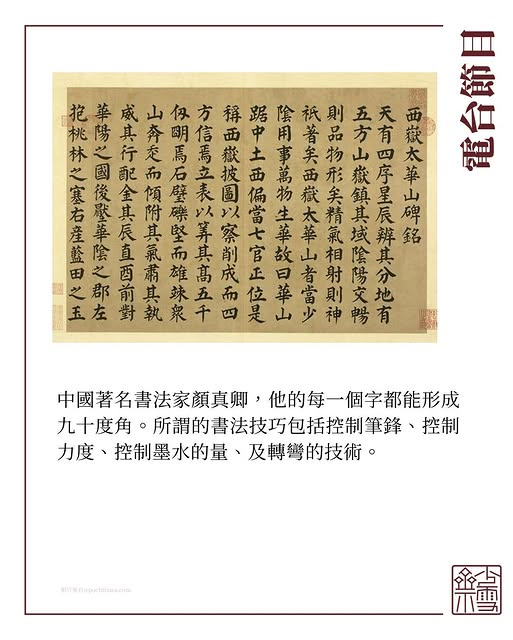

Following the previous episode discussing the origin of writing and the formation of different styles, this episode will further deepen your historical understanding of writing. In today’s computer age, many people are primarily exposed to computer fonts, which cannot be compared to historical script styles. Computers lack the structural composition of ancient times. In fact, each character has its own structure, known as its composition. A piece of calligraphy contains many characters, often arranged vertically, while horizontal scrolls feature horizontal alignment. In ancient times, about ninety percent of writing proceeded from right to left, with a small portion from left to right, which is the opposite of modern practice. The spacing between lines also had its own spatial rules; space is an element of composition, and the conception of structure and balance is called the layout methodology.
Furthermore, characters also have distinctions in “shi” (momentum/force). For example, when characters are concentrated on the left, those on the right appear weaker, indicating that the “shi” is focused on the left. The brushwork also has distinctions in “shi.” Applying more force when wielding the brush naturally creates greater “shi,” while thinner lines naturally lack that kind of imposing manner; this is called brush momentum. The previously mentioned “composition,” “layout methodology,” and “brush momentum” constitute the balance within the elements of calligraphy.